HIV, or Human Immunodeficiency Virus, is an enveloped retrovirus that targets the immune system and, if left untreated, can progress to AIDS over the years. The virus infects cells that carry the CD4 receptor, gradually weakens the immune response, and creates conditions that allow opportunistic infections and certain cancers to develop. HIV is most commonly transmitted through unprotected sexual contact, the use of infected blood and blood products, and mother-to-child transmission. Early diagnosis and antiretroviral treatment significantly slow the progression of the disease and reduce AIDS-related deaths.

HIV, or Human Immunodeficiency Virus, is an enveloped retrovirus that targets the immune system and, if left untreated, can progress to AIDS over the years. The virus infects cells that carry the CD4 receptor, gradually weakens the immune response, and creates conditions that allow opportunistic infections and certain cancers to develop. HIV is most commonly transmitted through unprotected sexual contact, the use of infected blood and blood products, and mother-to-child transmission. Early diagnosis and antiretroviral treatment significantly slow the progression of the disease and reduce AIDS-related deaths.

  • HIV is a retrovirus that infects CD4+ T lymphocytes and, if left untreated, progresses to AIDS within 8–10 years.
  • HIV is transmitted through unprotected sexual contact, exposure to infected blood, and mother-to-child transmission during pregnancy, childbirth, or breastfeeding.
  • Acute HIV infection usually causes flu-like symptoms 2–4 weeks after exposure. AIDS is diagnosed when the CD4 count falls below 200/mm³ in advanced stage.
  • Fourth-generation ELISA and PCR tests are used for diagnosis. A negative result on day 45 is considered 99% reliable.

What Is Human Immunodeficiency Virus (HIV)?

HIV is an enveloped retrovirus belonging to the Lentivirinae subfamily. It causes a chronic disease characterized by AIDS (Acquired Immunodeficiency Syndrome), in which opportunistic infections occur as a result of immune system suppression. If HIV is left untreated, the immune system becomes suppressed over the course of 8–10 years, and AIDS develops. Antiviral (or antiretroviral) treatments used for HIV dramatically slow the progression of the disease and have reduced AIDS-related deaths.
Today, the classic HIV-1 virus is responsible for the vast majority of infections worldwide. However, although very rare, HIV-2 is identified as the cause of infection in some patients of West African origin. These two viruses have very similar genetic structures, but their envelope glycoproteins differ in their antigenic properties. The clinical disease caused by HIV-2 develops and worsening progresses more slowly.

Image title

**Figure 1. HIV structure and genome (adapted from reference 2).

HIV is a spherical virus approximately 120 nm in diameter (a red blood cell is about 60 times larger than HIV). It contains two single-stranded RNA genomes and is surrounded by a lipoprotein envelope. The RNA genome is tightly associated with the P7 nucleocapsid protein and the enzymes required for virion formation (such as reverse transcriptase, protease, ribonuclease, and integrase), and is enclosed within a cone-shaped capsid composed of P24 protein. The P17 protein forms the matrix structure that surrounds the capsid and maintains the integrity of the virion. The glycoproteins within the lipid envelope consist of the gp120 attachment protein and the gp41 transmembrane glycoprotein.

The primary targets of the virus are CD4+ T lymphocytes. A decrease in the number of T lymphocytes leads to immunosuppression, which may result in life-threatening opportunistic infections and malignancies in various organs. Within the first 1–6 weeks after the virus enters the body, a clinical condition known as acute retroviral syndrome develops. During this period, the clinical findings are not specific to HIV infection and may vary considerably. Fever (96%), lymphadenopathy (74%), pharyngitis (70%), skin rash (70%), muscle or joint pain (54%), diarrhea (32%), headache (32%), nausea and vomiting (27%), and enlargement of the liver and spleen (14%) may occur. The signs and symptoms of the acute phase resolve spontaneously within 2–4 weeks. The person is infectious from the acute stage of infection onward. In the early stage of infection, the virus is present in the infected person’s blood, although antibodies and antigens cannot yet be detected. This period is known as the “window” period (eclipse period). In most cases, antibodies against the virus develop within 6–12 weeks.

How Is HIV Transmitted?

HIV is mainly transmitted through any form of unprotected sexual contact with a person living with HIV, through the use of blood and blood products from a person living with HIV, and from a mother living with HIV to her baby during pregnancy, childbirth, or breastfeeding. At least half of new HIV cases are transmitted by people who are unaware that they are living with HIV. At least half of people living with HIV are diagnosed at a late stage.

  • During sexual contact (oral, vaginal, or anal), HIV may be transmitted when the blood, semen, or vaginal secretions of a partner living with HIV enter the body. The virus may enter the body through sores or abrasions in the rectum, vagina, or mouth during sexual contact.
  • HIV may also be transmitted by sharing syringes used for intravenous drug use.
  • The risk of transmission is closely related to the type of sexual activity. During receptive anal intercourse with a person living with HIV, the probability of transmission ranges from 1 in 30 to 1 in 100. During insertive anal intercourse, this probability has been estimated at approximately 1 in 1,000.
  • The probability that a man living with HIV will transmit the virus to a woman through vaginal intercourse is reported to be 1 in 1,000. The probability that a woman living with HIV will transmit the virus to a man through the same route is reported to be 1 in 10,000. In addition, the risk of transmission is known to increase significantly when the sexual partner of a person living with HIV has an inflammatory or ulcerative sexually transmitted infection, when intercourse is traumatic, or when it occurs during menstruation.
  • A sufficient number of studies have reported that the probability of HIV transmission to a circumcised man is significantly lower than it is to an uncircumcised man.
  • The probability of infection following a needlestick injury involving a syringe needle previously used on a person living with HIV is reported to be 1 in 300. Among people who use drugs and share the same syringe, this probability is reported to be approximately 1 in 150.
  • The probability of infection is very high when a healthy person receives a blood transfusion from a donor living with HIV. People who received blood or blood products before 1985, organ or tissue recipients, and people with hemophilia are at high risk of infection. Today, donated blood is screened for HIV, so the likelihood of transmission through blood transfusion is low.
  • Without any preventive treatment, the probability that a baby will become infected when born to a mother living with HIV ranges from 13% to 40%. The mode of delivery, whether vaginal or cesarean, the mother’s viral load, and whether the baby is breastfed after birth significantly affect the rate of transmission. The risk of infection decreases substantially when the mother receives antiretroviral treatment during pregnancy and the baby receives antiretroviral treatment immediately after birth.

Who Is at High Risk of HIV Transmission?

Anyone can become infected with HIV, regardless of age, sex, sexual orientation, or race. The risk of HIV infection increases with unprotected sexual intercourse, having multiple sexual partners (homosexual or heterosexual), having other sexually transmitted infections (because N. gonorrhoeae, C. trachomatis, and HPV infections can cause lesions such as open sores and ulcers in the genital tract that facilitate HIV transmission), and sharing syringes during intravenous drug use. Babies born to mothers living with HIV are also at high risk.

How Is HIV Not Transmitted?

HIV is not transmitted from person to person through saliva, sweat, tears, social kissing, hugging, dancing, or shaking hands. HIV is not transmitted through shared toilets, swimming pools, mosquito bites, or pets. HIV is also not transmitted through food, drinks, or the air.

What Are the Symptoms of HIV?

The signs and symptoms of HIV/AIDS vary depending on the stage of the disease. HIV infection is divided into three stages: acute HIV infection (primary infection), chronic HIV infection (clinical latency), and symptomatic HIV infection.
Acute HIV infection is the stage that occurs 2 to 4 weeks after HIV enters the body and is characterized by severe flu-like symptoms. The most common signs and symptoms include:

  • Fever
  • Headache
  • Muscle and joint pain
  • Skin rashes
  • Sore throat and painful mouth sores
  • Swollen lymph nodes (lymphadenopathy), mainly in the neck area
  • Diarrhea
  • Weight loss
  • Cough
  • Night sweats

Although these symptoms are very common, they may be mild enough to go unnoticed. They usually disappear within 1 week to 1 month. Because they cannot be distinguished from the symptoms of other viral infections, they may be mistaken for another viral respiratory infection. During this period, the amount of virus in the bloodstream (viral load) may be high, making the person highly infectious. More persistent or severe symptoms may not appear for several years after the initial infection.

Chronic HIV infection (clinical latency): During this stage, HIV remains present in the body and in white blood cells. Many people have no symptoms at this stage, while some may develop serious illness. Without antiretroviral treatment, this stage may last for years.

Symptomatic HIV infection: As the virus continues to multiply and damage immune system cells, mild infections or chronic signs and symptoms may develop. These may include fever, fatigue, lymphadenopathy (one of the early signs of HIV infection), diarrhea, weight loss, oral Candida infection, shingles, and pneumonia.

Advanced-stage disease/AIDS: In most untreated HIV cases, AIDS develops an average of 8–10 years after the virus is acquired. The disease has progressed to AIDS when the CD4 T-lymphocyte count falls below 200 cells/mm³ and serious AIDS-defining opportunistic infections or cancers (HIV-related malignancies) develop together with an increase in viral load. The stage in which the CD4+ T-lymphocyte count is <50 cells/mm³ and HIV wasting syndrome occurs as a result of weakness and weight loss is defined as advanced-stage HIV infection. Complications affecting the nervous system, kidneys, and liver may develop in advanced-stage disease.

Common infections associated with HIV/AIDS include: Pneumocystis jirovecii pneumonia, candidiasis (thrush), tuberculosis, CMV infection, cryptococcal meningitis, and Toxoplasma infection.

Common cancers associated with HIV/AIDS include: lymphoma (the most common early sign is painless swelling of the lymph nodes in the neck, armpits, and groin) and Kaposi sarcoma (a tumor of the blood vessels characterized by pink, red, or purple lesions on the skin and in the mouth).

How Does HIV Affect the Immune System?

In the human body, the main targets of HIV are helper T lymphocytes that carry the CD4 antigen. HIV can also enter monocytes, macrophages, dendritic cells, and microglial cells. Damage to these cells, which play a crucial role in regulating the immune system, gradually weakens the immune response. B lymphocytes and macrophages lose the regulatory support of CD4 lymphocytes and may also be directly targeted by the virus. As a result, both the cellular and humoral components of the immune system become weakened. When large numbers of CD4 T lymphocytes are destroyed, the immune system becomes unable to fight serious infections, various types of pneumonia such as Pneumocystis jirovecii pneumonia and tuberculosis, certain cancers such as Kaposi sarcoma, and other diseases. Over time, damage to renal tubular cells and epithelial cells of the gastrointestinal tract, which can be directly infected by the virus, also contributes to the clinical condition. Although most of the signs and symptoms caused by the disease are related to immune system dysfunction, autoimmune and hypersensitivity reactions resulting from impaired immune regulation can also worsen the condition.

Even without receiving any treatment, infected individuals may remain asymptomatic for many years. Although the incubation period between infection and the onset of disease varies greatly from person to person, the average duration is reported to be approximately 10 years. The disease may initially present with nonspecific symptoms such as fever, night sweats, and weight loss, as well as more specific findings such as oral hairy leukoplakia, disseminated Kaposi sarcoma, and cutaneous bacillary angiomatosis. Generalized lymphadenopathy is also a common finding in the early stages of infection.

Why Should an HIV Test Be Performed?

Many studies have shown that early diagnosis and treatment have beneficial effects on HIV infection. Early diagnosis reduces mortality, extends life expectancy, and lowers transmission rates. For this reason, the World Health Organization (WHO), the European Centre for Disease Prevention and Control (ECDC), and the Centers for Disease Control and Prevention (CDC) recommend promoting the earliest possible detection of cases and implementing measures to support this goal. Early diagnosis and treatment are particularly important because the risk of transmission is higher during acute HIV infection than in the later stages of infection, and early treatment has a positive effect on the clinical response.

  • To identify individuals living with HIV as soon as possible, link them to healthcare services, and initiate treatment,
  • To provide HIV-negative individuals with counseling on routes of transmission,
  • To identify individuals living with HIV and reduce transmission to others (especially blood and organ donors, pregnant women, and sexual partners),
  • To initiate preventive services such as informing, counseling, and testing the sexual partners of individuals living with HIV,
  • To monitor the course of the disease and confirm the diagnosis of AIDS,
  • To evaluate the effectiveness of treatment.

https://synevo.com.tr/tr/CYBH

Who Should Be Tested for HIV?

  • All individuals between the ages of 15 and 65
  • All individuals attending sexually transmitted infection clinics
  • Individuals who are considered to have been exposed to HIV based on their medical history
  • Individuals with symptoms associated with acute retroviral illness or immunosuppression
  • Individuals with a past or current history of sexually transmitted infections (STIs)
  • Individuals who have experienced sexual abuse
  • Known sexual partners of individuals living with HIV
  • People who inject drugs and have a history of sharing needles
  • Individuals with a history of sexual contact in a country with a high prevalence of HIV
  • Sexual partners of individuals at risk of HIV infection (for example, those living in a country where HIV is endemic)
  • Individuals with a history of receiving blood or blood products before routine HIV screening was introduced (before 1985 in most European countries)
  • All pregnant women, regardless of risk factors
  • Individuals who wish to be tested (especially those who have never been tested before)

What Is an HIV Test?

An HIV test shows whether you are infected with HIV. The only way to know whether you have HIV is to get tested. No special preparation is required for an HIV test, and there are no risks other than mild and temporary discomfort during blood collection. Knowing your HIV status provides important information that can help you and your partner stay healthy. The main aim of HIV diagnosis is to detect people living with HIV quickly and accurately. HIV infection is diagnosed using serological tests that detect antigens and antibodies, or molecular tests known as PCR (polymerase chain reaction), which detect the virus’s genetic material and measure the amount of virus in the blood (viral load).

Serological Tests

Today, fourth-generation ELISA tests are the most commonly used screening tests. They detect HIV-1/HIV-2 antibodies and the HIV-1 p24 antigen together and have high sensitivity and specificity. These tests have shortened the window period during which the virus cannot be detected. Early diagnosis has reduced mortality and transmission rates and increased life expectancy.

Fourth-generation ELISA tests are more sensitive than other test kits and can detect infected individuals at an early stage, at approximately day 14.

Image title

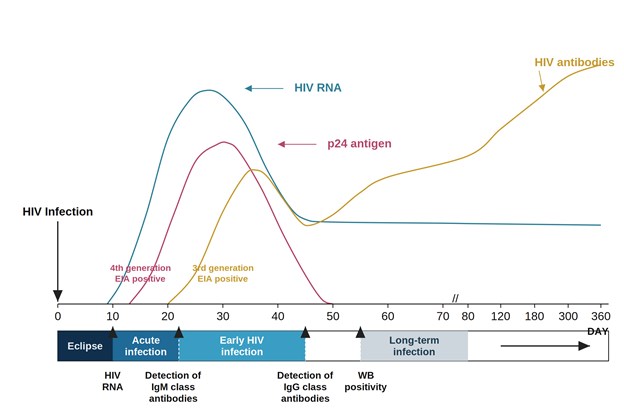
Figure 2. Course of HIV infection and virological markers detectable at different stages of infection (adapted from reference 3)

p24 Antigen

Detection of the p24 antigen, the capsid protein of HIV, may help with early diagnosis during the window period before antibody production begins. Tests based on p24 antigen detection may begin to produce positive results within 1–4 weeks after infection. Once antibody production begins, the serum concentration of this antigen decreases to an undetectable level. Because these tests are not sufficiently sensitive, tests based solely on p24 measurement are not recommended for screening. However, when the p24 antigen test is combined with an antibody detection test, the sensitivity of screening during the early stage of infection can be increased.

During the first 8–11 days after HIV transmission, no HIV-related marker can be detected in the serum (window period). The earliest marker to appear in the serum is HIV RNA, which becomes detectable between days 8 and 11. This is followed by the p24 antigen, which becomes detectable by the end of the second week. Subsequently, antibodies specific to various HIV antigens, particularly the HIV p24 antigen, become detectable, first in the IgM class and then in the IgG class. The changes in HIV markers over time and their positivity at different stages of HIV infection are summarized in Figure 2.

HIV antibodies may develop slowly, and in most patients, it may take 4–8 weeks for them to reach detectable levels. With fourth-generation tests, antibodies are detectable in 25% of cases by day 13 after suspected exposure, 50% by day 18, 75% by day 24, and 99% by day 45.

When a fourth-generation test is repeated 45 days after exposure and the result is negative, the person can be considered HIV-negative with 99% certainty. However, this applies only if there has been no new exposure during this period and no immunosuppressive condition that could delay seroconversion. Even when the risk of infection is considered high, follow-up with antibody tests for longer than 6 months is generally considered unnecessary.

Fourth-Generation ELISA Tests

ELISA tests that detect antibodies specific to HIV-1/2, or both these antibodies and the HIV-1 p24 antigen, are commonly used in the diagnosis of HIV infection. Fourth-generation ELISA tests, known as “combo” tests, are currently recommended for detecting HIV-1 and HIV-2 antibodies together with the HIV-1 p24 antigen.

In our laboratory, fourth-generation ELISA test kits with sensitivities of 99–100% and specificities above 99.7% are used with CLIA, ECLIA, and CMIA methods.

In addition, the HIV-DUO Ultra test, performed using the ELFA (Enzyme-Linked Fluorescent Assay) method, allows the separate detection of antibodies against HIV-1/HIV-2 and the p24 antigen and has a specificity of 99.8–100% and a diagnostic sensitivity of 100%.

Confirmatory Tests

In many diagnostic algorithms, samples found to be reactive by screening tests must be tested using highly specific confirmatory tests. The most commonly used tests for this purpose are Western blot (WB), LIA (line immunoassay), or rapid HIV confirmatory tests that detect HIV-specific antibodies (rapid HIV-1/2 antibody differentiation confirmatory tests). WB tests detect antibodies against viral antigens (p24 or p31) and glycoproteins (gp41 and gp120/160). Rapid HIV-1/2 antibody differentiation confirmatory tests were recommended as replacements for WB tests in the HIV diagnostic and confirmatory algorithm updated by the CDC in 2014. The first test introduced for this purpose was the Multispot HIV-1/HIV-2 Rapid Test (Bio-Rad Laboratories, Redmond, WA, USA), a rapid ELISA test based on the lateral-flow method. The Geenius HIV-1/2 Supplemental Assay (Bio-Rad Laboratories, Redmond, WA, USA), which was developed later, was introduced for use as a supplemental and confirmatory test.

Molecular Tests

Molecular tests detect HIV RNA and are used to monitor prognosis and treatment in confirmed HIV infection, to diagnose HIV infection in infants younger than 18 months in whom antibody tests cannot be used because of maternal antibodies, and to diagnose acute HIV infection when the antibody response is insufficient. RT (reverse transcriptase)-PCR and real-time PCR are examples of these tests. For confirmatory purposes, tests with a lower detection limit of ≤50 copies/mL should be preferred.

A definitive diagnosis should not be made based solely on a positive result detected by molecular testing in a single sample. In particular, values <5000 copies/mL detected at the time of initial diagnosis should be interpreted with caution, and testing should be repeated using a new sample. These tests should be performed on plasma samples.

Serological tests cannot distinguish between antibodies produced as a result of active neonatal HIV infection and antibodies passively transferred from an infected mother to her child. Therefore, during the first 18 months of life, diagnosis of infection should be based not on antibody tests but on tests that directly detect nucleic acids using the PCR technique.

Interpretation of Test Results

Interpretation of a “negative” HIV antibody test result: Because the negative predictive value is sufficiently high, a “negative” result obtained for a person living in a population with a low prevalence of HIV infection is considered sufficient to rule out the possibility of infection. However, if the person has recently had contact with someone known to be living with HIV or considered highly likely to be infected, a single “negative” result should not be considered conclusive, and follow-up is recommended.

It should be kept in mind that several weeks may need to pass after suspected exposure before HIV antigens and antibodies can be detected.

Interpretation of a “reactive” HIV antibody test result: If the initial test result is reactive, it is recommended that the test be repeated using a newly collected sample. When tests performed using two different techniques both yield reactive results, specificity has been reported to increase to nearly 100%, even in low-risk populations. However, an HIV diagnosis should not be based solely on an antibody test result, because false-positive results may occur for various reasons (such as the individual’s immune system and the sensitivity or specificity of the test). For a definitive diagnosis, reactive antibody test results must be confirmed by confirmatory tests or by demonstrating the presence of nucleic acid using the PCR technique.

If your antigen/antibody test and confirmatory tests are also positive when performed using a new sample, this may mean that you are HIV-positive; it does not mean that you have AIDS. At this stage, you should consult an infectious diseases specialist experienced in HIV treatment so that additional tests can be performed to assess the stage of the infection and antiretroviral treatment can be planned. If you are living with HIV, you are advised to see the specialists responsible for your follow-up and treatment regularly and to obtain detailed information about the disease, routes of transmission, and treatment. Today, HIV treatments have extended life expectancy and improved patients’ quality of life.

Frequently Asked Questions

1) How many days after suspected exposure should an HIV test be performed?
Fourth-generation tests achieve a high level of accuracy between 13 and 45 days after exposure. If a fourth-generation test performed on day 45 is negative and there has been no new high-risk exposure during this period, the result is considered negative with 99% certainty. Tests may produce negative results during the first 8–11 days (window period). In high-risk situations, repeat testing under a physician’s supervision is recommended.

2) Does a negative HIV test result definitively mean that there is no HIV infection?
In most cases, a negative test performed at the appropriate time rules out infection. However, repeat testing may be necessary if the test was performed too early or if a new high-risk exposure occurred afterward. The window period should be taken into account. Follow-up is recommended if there has been a high-risk exposure.

3) How can I schedule an HIV test? Where can I have the test performed?
You can schedule an appointment for an HIV test online:
https://onlineshop.synevo.com.tr/
For our laboratories in Istanbul:
https://synevo.com.tr/tr/Istanbul-Subeleri

4) Does a positive HIV test result mean that I have AIDS?
No. Being HIV-positive does not mean that you have AIDS. AIDS is the advanced stage of HIV infection and is defined by a marked decrease in the CD4 count (<200 cells/mm³) and the development of opportunistic infections. A positive result must be confirmed with confirmatory tests, and the stage of the infection is assessed by an infectious diseases specialist.

5) How is HIV most commonly transmitted?
HIV is most commonly transmitted through unprotected sexual contact, exposure to infected blood and blood products, and mother-to-child transmission. In particular:

  • Unprotected anal, vaginal, or oral sex
  • Sharing needles or syringes
  • Transmission during pregnancy, childbirth, or breastfeeding

The risk of transmission varies depending on the type of exposure and the presence of other sexually transmitted infections.

6) How is HIV not transmitted?
HIV is not transmitted through shaking hands, hugging, kissing, shared toilets, swimming pools, mosquito bites, food or drinks, or the air. Transmission through saliva, sweat, or tears has not been demonstrated. Everyday social contact is safe.

7) Can HIV be transmitted to the baby during pregnancy?
Without prophylaxis, the risk of mother-to-child transmission ranges from 13% to 40%. However, appropriate antiretroviral treatment during pregnancy and after birth significantly reduces this risk. The mode of delivery and breastfeeding also affect the risk. Routine HIV screening is recommended for pregnant women.

8) Who should be tested for HIV?
HIV testing is recommended at least once for all individuals between the ages of 15 and 65. It is also recommended for:

  • People with a history of unprotected sexual intercourse
  • People diagnosed with a sexually transmitted infection (STI)
  • People who inject drugs
  • Pregnant women
  • Partners of individuals living with HIV
  • Anyone who wishes to be tested, even if they have no known risk factors

9) What are the stages of HIV infection?
HIV infection progresses through the acute stage, the chronic (latent) stage, and the symptomatic stage. If left untreated, it may progress to AIDS within an average of 8–10 years. Flu-like symptoms may occur during the early stage, followed by a long period without symptoms. Antiretroviral treatment significantly slows the progression of the disease.

References

CDC – HIV Testing
https://www.cdc.gov/hiv/testing/index.html
TC Sağlık Bakanlığı – HIV/AIDS Tanı ve Tedavi Rehberi (2019)
https://hsgm.saglik.gov.tr/depo/birimler/bulasici-hastaliklar-ve-erken-uyari-db/Dokumanlar/Rehberler/HIV-AIDS_Tani-Tedavi_Rehberi_2019.pdf
Mayo Clinic – HIV/AIDS: Symptoms & Causes
https://www.mayoclinic.org/diseases-conditions/hiv-aids/symptoms-causes/syc-20373524
EKMUD – HIV/AIDS Tanı, İzlem ve Tedavi El Kitabı
https://www.ekmud.org.tr/haber/159-hiv-aids-tani-izlem-ve-tedavi-el-kitabi
MedlinePlus – HIV Screening Test
https://medlineplus.gov/lab-tests/hiv-screening-test
WHO – HIV/AIDS
https://www.who.int/health-topics/hiv-aids/#tab=tab_1
Retroviruses – Medical Microbiology (Murray PR., Rosenthal KS, Pfaller MA.)
Retroviruses.p627, 6th Ed., Medical Microbiology
Evrim Ağacı – İnsan Bağışıklık Yetmezliği Virüsü (HIV) ve AIDS Hakkında Bilmeniz Gerekenler
https://evrimagaci.org/insan-bagisiklik-yetmezligi-virusu-hiv-ve-sebep-oldugu-hastalik-aids-hakkinda-bilmeniz-gerekenler-343

The content on this website is provided for general informational purposes only and should not be considered a substitute for professional medical advice, diagnosis, or treatment. Always consult a qualified healthcare professional regarding any medical condition or treatment.

Date Updated: 13.07.2026
Editors: Alev Dülger Dağlı
Contact: [email protected]


Synevo Laboratuvarları, Medicover grubun global güç ve güveni ile Türkiye’de hizmet veren, bir Synevo Network kurumudur.